
On this page
Garage door painting comes up for two reasons: the door has faded or chalked and looks tired beside a freshly painted house, or the colour never suited the place and a new door is not in the budget. Both are fair reasons to pick up a roller. The catch is that a garage door is not a wall: it moves, flexes, bakes in afternoon sun and lives closer to the weather than any other painted surface on the house. Whether paint lasts depends on what the door is made of and how it was finished, so that is where this guide starts.
The short answer, by door type
- Pre-painted steel sectional or tilt door: yes. Wash, scuff, prime with a product made for factory-coated steel, then two thin coats of exterior acrylic.
- Roller door: generally no. The curtain coils around a drum every cycle and a paint film on a flexing corrugated sheet cracks and flakes. A cut-and-polish, a specialist spray system or a new curtain are the honest options.
- Timber door: yes, and it needs it. Paint or oil is what keeps moisture out of the boards.
- Powder-coated aluminium: sometimes. Paint will not key to powder-coat without an etch primer, and a brushed finish rarely matches the original sheen. One for a professional, or leave it.
- Any door with rust bubbling through: paint hides it for a season and it comes back bigger. That panel needs replacing, not painting.
Painting a Colorbond or pre-painted steel door
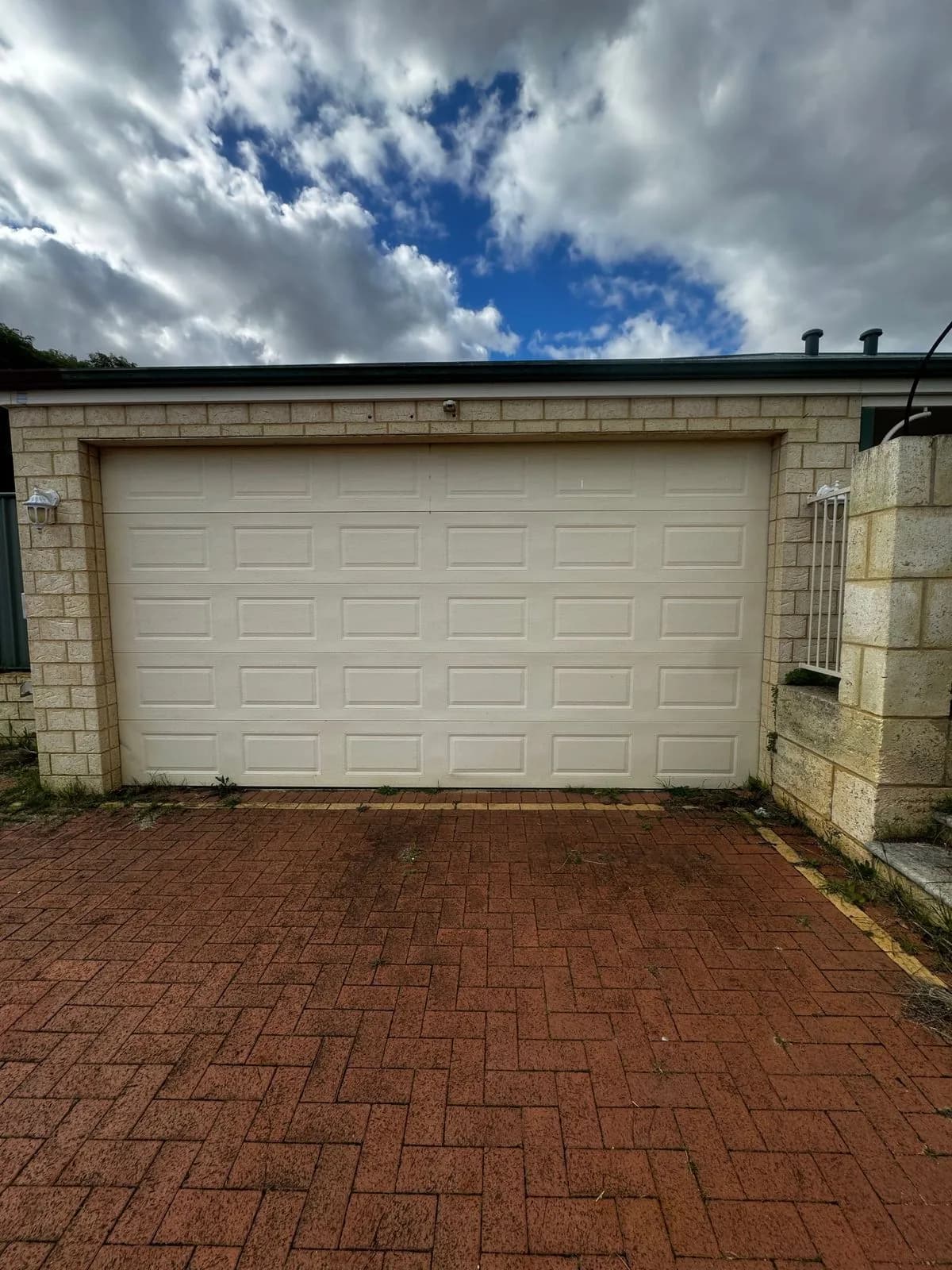
Most sectional doors in Australia are pre-painted steel, with Colorbond the name people reach for whether or not the door is actually that product. The factory coating is baked on and very smooth, which is good for weather and bad for adhesion: paint slid straight onto it peels in sheets within a year. So the prep is mechanical and chemical. Wash with sugar soap to lift the chalk, rinse and dry. Scuff the whole face with a fine abrasive pad until it has a dull, even tooth. Then apply a primer the paint maker specifies for pre-painted or galvanised steel, because that primer is what the topcoat holds onto.
On the paint itself we would rather point you at the labels than name a product, because ranges change. Exterior acrylic in low-sheen or satin is what most people use over the right primer; it flexes with the panel and hides ripples a gloss shows. Colour matters too: a dark colour on steel raises the panel's temperature sharply in afternoon sun, and some makers state a maximum darkness for that reason. Check the maker's care guidance first, and on a door only a few years old, ask whether a repaint affects the manufacturer's cover on the finish. When the colour you want is far from the colour you have, price a new garage door in Mandurah against the hours of prep.
Roller doors: why the curtain is different
A roller door is a single corrugated sheet that wraps around a drum above the opening. Every cycle bends every corrugation, and brushed or rolled paint sits on the factory finish as a separate film with no give. Within months it cracks along the ridges, then flakes, and the door looks worse than it did faded. Specialist systems that spray a thin, flexible coating onto roller curtains exist, but they are a professional job with the door fully dropped. If a faded roller door bothers you, start with a cut-and-polish, and if that is not enough, look at replacing the roller door with a new curtain in the colour you want.
Timber and aluminium doors
Timber tilt and sectional doors are the easy case: they were built to be refinished, and the coating is what keeps moisture out of the boards. Sand back anything flaking, treat soft timber, prime bare patches and recoat. Keep the film thin, because every coat adds weight and a heavier door needs its spring balance checked. Aluminium is the awkward one: custom slat and louvre doors are usually powder-coated, which paint will not grip without an etch primer, and a brushed topcoat never matches a powder-coated sheen. If the colour is wrong, ask the maker about re-coating the slats, or look at the custom cedar and aluminium doors that arrive powder-coated in the colour you actually want.
Prep and painting steps for a steel sectional
- Pick a mild, dry day: not in direct afternoon sun, when steel is too hot for paint to level, and not with rain due.
- Close the door and pull the manual release so a remote press cannot open it while you work.
- Wash the whole face with sugar soap, rinse thoroughly and let it dry. Chalk left behind is the most common reason a repaint fails.
- Sand rust spots to bright metal and spot-prime with a rust-inhibiting primer. If rust has gone through the panel, stop and read the replacement section below.
- Scuff the entire surface with a fine abrasive pad until uniformly dull, then wipe off the dust.
- Mask the seals, handle, lock and windows, and keep paint off every hinge, roller, track, cable and spring. Painted hardware seizes.
- Apply one thin coat of the specified primer and let it cure fully, then two thin coats of exterior acrylic, panel by panel, following the joins so the strokes hide in the profile. Thin coats flex; thick coats crack.
- Leave the door closed until the paint has cured, then reconnect the opener, run the door and check no paint has bridged a join or a seal.
Paint the panels, not the hardware
Springs, cables, rollers, hinges and tracks stay unpainted and untouched. Paint on a roller or hinge stiffens the door and loads the springs; paint on a cable hides fraying. Never adjust, unhook or lean on a spring or cable to reach a panel edge, and never run the door with a ladder or a person in the opening. The springs hold enough energy to cause serious injury.
Salt, sun and the west-facing door
Garage doors around Mandurah fade and chalk faster than the same doors inland for a plain reason: salt off the ocean and the estuary settles on the door face and the afternoon westerly sun bakes it in. So prep matters more here than the tin implies: wash a door near the water twice, because salt trapped under primer is a corrosion cell waiting to start. Expect the repaint to fade sooner than the factory finish did, and once it is done, a hose-down every month or two takes the salt off before it does damage.
When a new panel or door is the better call
Paint fixes colour. It does not fix rust through a bottom rail, a panel skin separating from its core, a stretched curtain or a dent that filler would only disguise. If one panel is the problem, replacing that single panel is usually possible on a door still in production. If the door is very old, out of production or damaged across several panels, a new door in a factory colour will outlast any repaint. For dents, our guide to fixing a dented garage door covers what can be pushed out and what cannot. The price for any of that is agreed before work starts, and a photo of the door narrows it down quickly.