
Insulated Garage Doors in Mandurah: Cooler, Quieter Sectional Doors
Foam-cored panels instead of a single skin of steel — a garage that stays usable through a WA summer, a door that runs noticeably quieter, and panels stiff enough to shrug off everyday knocks.
- Beats the Summer Heat
- Quieter Operation
- Measure & Quote
- Installed across Mandurah, the Peel region and up to Rockingham
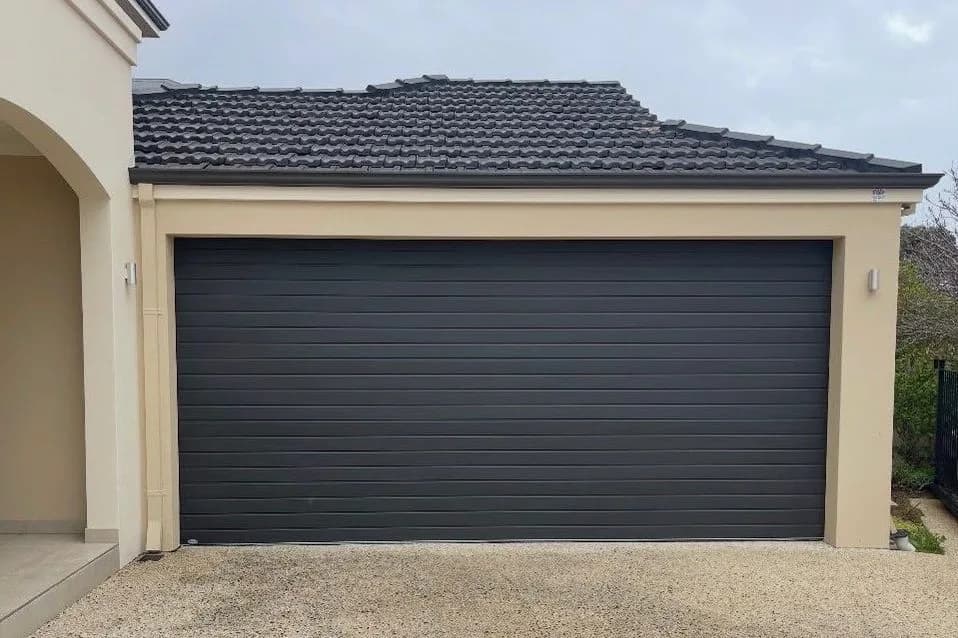
New Insulated Range
Quick Answer
Insulated garage doors in Mandurah are sectional panel doors with a foam core bonded between two steel skins instead of a single sheet of steel, and we supply and install them. The core slows the heat coming through a west-facing door in a WA summer, damps the drumming that makes an ordinary door loud, and stiffens each panel against dents — worth it for any garage that adjoins living space or doubles as a gym, workshop or office. Every door is measured on site and quoted in writing.
How Insulated Garage Doors Work in a WA Summer
A standard garage door is one sheet of pressed steel. In February that sheet sits in the afternoon sun and re-radiates the heat straight into your garage, which is why a closed garage can feel hotter than the driveway it faces. An insulated door replaces that single skin with a sandwich: steel outside, a bonded foam core in the middle, steel inside — the same hinged-panel construction as any sectional garage door, with a core added. The heat has to cross an insulating layer instead of a conductor, and on a west-facing Mandurah garage in summer the difference is the gap between a room you avoid and a room you use.
Not every core is the same. Most insulated doors use either polyurethane foam injected between the skins, which bonds to the steel and fills every corner, or polystyrene boards glued into the panel. Polyurethane generally insulates better for its thickness and makes a stiffer panel; polystyrene is lighter and cheaper. Makers publish an insulation figure for each door, so compare the published figures for the exact doors you're quoted rather than the word "insulated" on its own. Colour matters too: a dark Monument or Night Sky face soaks up far more sun than Surfmist or a light grey, so an insulated core earns its keep most on a dark, west-facing door.
The second change surprises people more than the first. Foam kills vibration. A single-skin door is essentially a large steel drum, and every movement resonates through it — the boom that carries into the bedroom above when someone leaves early. Bond a foam core to that steel and the drumming stops. The door still makes the mechanical sounds of its wheels and motor — worn ones are covered in our guide to garage door rollers and hinges — but the boom goes, and if you're chasing a noisy garage door that's often half the fix.
The third change is structural. A foam-cored panel is far stiffer than a single skin, so it resists the knocks that put a permanent dimple in an ordinary door — a reversing towbar, a bike handlebar, a basketball. Stiffer panels also stay flatter across a wide double opening, which keeps the door tracking cleanly for longer. And a garage that holds its temperature is one where tools, paint, a second fridge or a home gym don't cook every summer.
There is a trade-off worth stating plainly: an insulated door is heavier. The springs have to be tensioned to the finished door's actual weight, and the opener has to be rated for it — an underspecified motor on a heavy insulated door works too hard and fails early. We size both on every install, and it's exactly where a cheap quote hides, so ask whoever quotes you how they're sizing the springs and the motor. Seals finish the job: perimeter and floor seals stop hot air and fine sand getting round the edges of an otherwise well-insulated door.
Common Problems We Fix
What's Included
- On-site measure — width, headroom, side room, square and which way the door faces
- A written quote naming the door, panel profile, colour and motor
- Foam-cored sectional panels in the Colorbond-style colour range
- Springs tensioned to the finished insulated door's actual weight
- An opener specified for the heavier door, not the cheapest that fits
- Full perimeter and floor seals — an insulated door with a draughty gap is half a door
- Old door, tracks, springs and hardware removed and taken away
How Our Repair Process Works
Measure on site
The opening measured properly, plus which way it faces — orientation is half the insulation argument.
Panel and colour chosen
Profile and finish picked against the house, with the published insulation figures for that door put in front of you.
Written, itemised quote
The exact door, seals and motor named in writing — and the quoted figure is the invoiced figure.
Your door is manufactured
Built to your measured opening; the maker's lead time is confirmed when you order.
Installation day
Old door away, new door hung, springs tensioned to its real weight and seals fitted all round.
Handover and aftercare
Motor force and travel set, safety reversal proven — and we service it later.
Cost Guidance
An insulated door costs more than the single-skin equivalent — the foam core, the heavier hardware and the seals are all real materials — and how much more depends on the opening size, the panel profile and finish, and whether you are automating at the same time. That makes the measure the only honest source of a number, not a page. What we will tell you at the quote is exactly what the premium buys on your garage specifically, because a south-facing garage that stores a lawnmower and a west-facing garage that doubles as a gym are very different cases. The figure we write down is the figure you pay. Our page on new garage doors in Mandurah walks through every door style and what each one involves.
Final pricing depends on the cause, parts required, and door size — confirmed on inspection before any work begins.
Why Choose Mandurah Garage Door Repairs
Built for WA afternoons
A west-facing door here takes hours of direct summer sun. That orientation is the first thing we ask about, and it usually decides the recommendation.
Springs matched to the real weight
Insulated doors are heavier. Tensioning to the finished door's actual mass is what stops premature spring and motor failure.
Sealed properly, not just insulated
Perimeter and floor seals come as part of the job — an insulated panel above a 20mm gap is money half spent.
Honest about when it isn't worth it
A detached, south-facing garage you only park in probably doesn't need one. We'll say so rather than upsell.
Coast-ready specification
Powder-coated and marine-grade options for exposed sites, where corrosion decides what lasts.
We service what we install
The tradesman who hangs your door is the one who tunes it later. One number for the door's whole life.
Related Services
Areas We Service
Mandurah Garage Door Repairs provides this service across Mandurah, including:
Don't see your suburb? View all service areas — we still likely cover it.
Request QuoteFrequently Asked Questions
Yes, most of all on an attached garage facing the afternoon sun. A single-skin steel door absorbs heat on the outside and re-radiates it inside, so the garage can sit well above the outdoor shade temperature by late afternoon; a foam-cored door puts an insulating layer in that path. You also get a door that runs quieter and panels that are more rigid. What an insulated door is not is air-conditioning — it slows heat transfer, it doesn't cool the room.
It depends on what the garage is and which way it faces. If it's attached, shares a wall or ceiling with a bedroom or living room, faces west, or gets used as anything other than parking — a gym, workshop, office, or storage for things that don't like heat — then yes, comfortably. If it's a detached south-facing garage you only park in, the premium is harder to justify and we'll tell you so. The benefits arrive together: less heat, much less noise, and stiffer panels that resist dents.
An insulated door sits above the single-skin equivalent of the same size and style, and where exactly depends on the opening width, the type of core, the panel profile and finish, and whether an opener is part of the job. National averages aren't much use because they blend very different markets. We measure the opening and put one written, itemised figure in front of you naming the exact door — the only kind of quote you can properly compare against another. The price is agreed before any work starts.
Among everyday residential doors, a sectional with an injected polyurethane core is usually the best insulated, because the foam fills the whole panel and bonds to both skins; thicker panels insulate more. Polystyrene-cored panels come next, and single-skin steel rollers and tilts insulate least. Each maker publishes an insulation figure for its doors, so ask for that figure on every door you're quoted and compare like with like — along with the seals, which decide how much hot air sneaks round the edges.
You can, and for some garages it's a sensible half-measure. The most affordable first step is proper seals — perimeter and bottom seals — because gaps around the door are often where much of the heat comes in. After that, retrofit foam or foil garage door insulation kits cost a fraction of a new door and take some edge off the heat. The honest limitations: they add weight the springs were never tensioned for, don't stiffen the panels the way a bonded core does, and their adhesive can let go in a hot Mandurah garage. If you're replacing the door anyway, factory-insulated is the better spend.
It can, if the springs and opener aren't matched to it. A factory-insulated door is heavier than the single-skin door it replaces, so we tension the springs to the finished door's actual weight and fit an opener rated for it. The real risk is a retrofit kit glued onto an existing door: the springs were set for the lighter door, so it becomes hard to lift by hand and the opener strains. Adjusting spring tension to suit is a job for a tradesman — the springs are under load whenever the door is shut.
That question comes from the retrofit world. Reflective foil products stuck to the inside of a single-skin door need an air gap in front of the foil to work — without it you lose most of the benefit. A factory-built insulated door doesn't have the problem: the foam is bonded directly between the two steel skins as one structural panel, so there's no gap to get right and nothing to come unstuck.
Get a quote
Book Insulated Garage Doors Mandurah in Mandurah
Experienced, qualified and local. Send the form and we'll get back to you with a fair quote — or call now and speak to a technician.
- 0476 156 953
- San Remo WA 6210
- Mon–Fri5 AM – 9 PMSat–Sun5 AM – 9 PM
Request a Quote
Prefer to call? 0476 156 953Ready to upgrade your
garage door experience?
Whether it's an emergency repair in Mandurah right now or a quote for a new door anywhere in Mandurah, we've made getting help faster and easier than ever.