
On this page
How often you should service a garage door comes down to how hard it works and what the air around it is like. It's the heaviest moving thing in most homes, and for many families it's also the real front door — cycled more times a day than anything else in the house, yet often the least looked-after machine on the property. Most sudden failures give months of warning first as a squeak, a shudder or a door that feels a little heavier. A service visit is where those warnings get heard.
The right servicing interval for your door
- Typical home, a few opens a day, away from the coast: every 12 months
- Door used as the main entry, or five or more opens a day: every 6–9 months
- Within a couple of kilometres of the ocean or the estuary: every 9 months at most
- Door over 10 years old on its original springs: every 6–12 months, watching the springs closely
- Commercial and strata doors cycling all day: every 6 months, all doors on the one schedule
The pattern behind those numbers is cycles, not the calendar. Springs are commonly rated around 10,000 open-close cycles, and every other wearing part — rollers, hinges, cables, the opener's drive — ages the same way. A door opened twice a day and a door opened ten times a day are living very different lives; service the usage, not the anniversary. The garage door springs guide explains how that cycle count plays out.
Why coastal doors need servicing sooner
This is the part a calendar gets wrong. Salt carried on the sea breeze settles on everything near the water, and garage hardware takes it badly: spring steel pits, cable strands rust from the bottom bracket up, roller bearings dry out, and bottom seals perish under sun and salt together. Fine sand blown into the tracks near the beach adds grinding wear. In Mandurah, canal and beachfront homes feel this first. A 12-month interval that suits a sheltered inland street is optimistic on an exposed one — and a freshwater rinse of the door between services genuinely helps.
What a garage door service involves
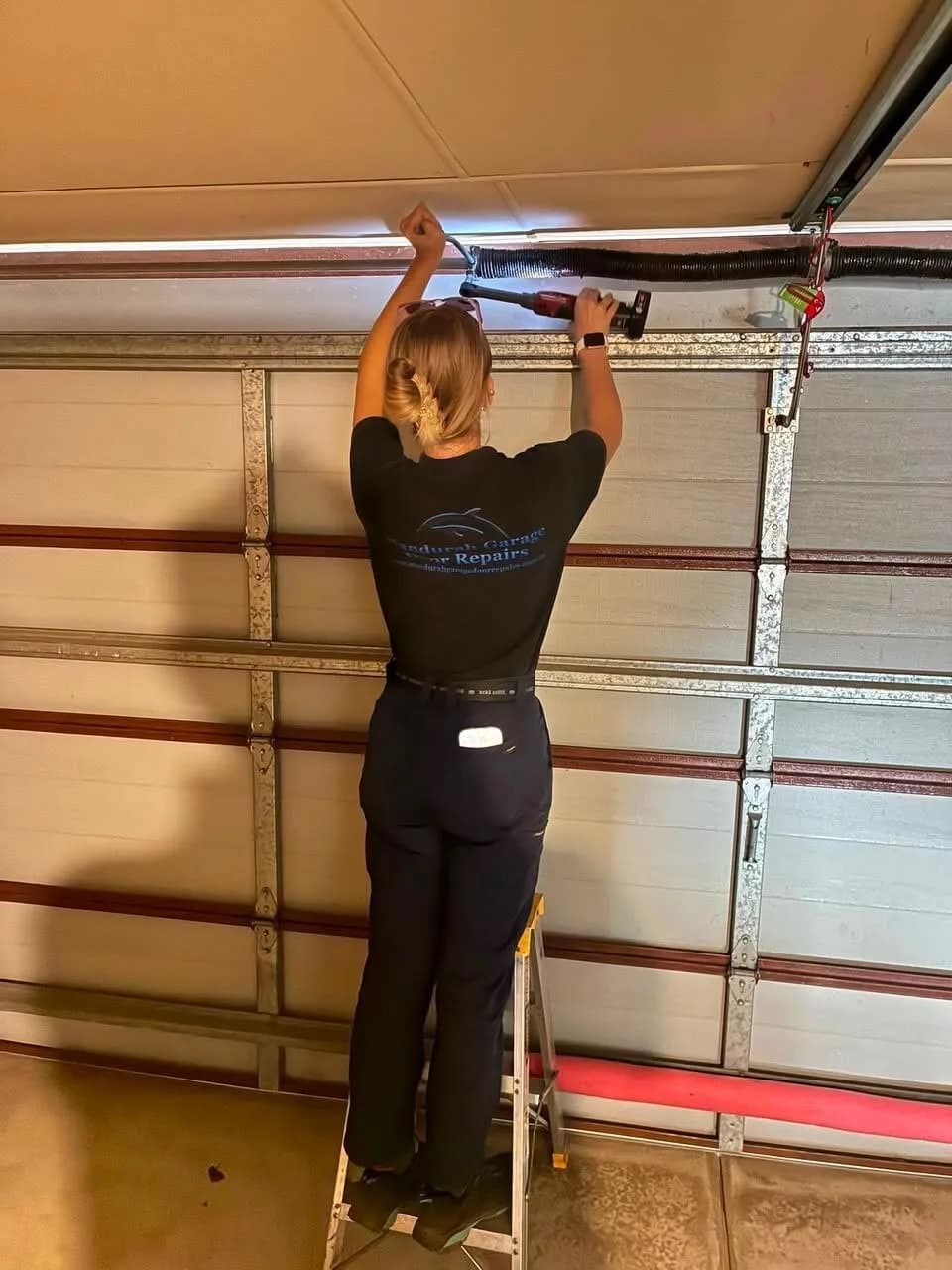
A proper service re-tunes the whole machine rather than giving it a squirt of spray. Our garage door servicing in Mandurah covers the mechanical half — springs checked and re-tensioned to the door's real weight, tracks, rollers and hinges cleaned and lubricated, cables and drums checked for fraying, every fixing the door's own vibration has loosened tightened up — and the electrical half: the opener's force and travel limits set, remotes checked, safety beams aligned, and the auto-reverse tested against a real obstruction instead of assumed. You get a note of anything wearing and roughly when it will need attention.
What gets checked on the visit
- Spring tension and door balance, tested by hand with the opener released
- Lift cables, bottom brackets and drums for fraying and rust
- Rollers, hinges and track fixings — cleaned, lubricated and tightened
- Opener force and travel limits, then the auto-reverse against an obstruction
- Safety beams aligned and remotes tested
- Bottom seal and weather seals for gaps and perishing
The best garage door lubricant, and how often to use it
Use a silicone or white lithium spray made for garage doors, not WD-40. Plain WD-40 is a cleaner and water displacer; it strips the grease that's there and leaves little behind, so the squeak comes back within days. Apply it every three to six months — closer to three near the beach — to the roller bearings, hinge pivots, the spring coils and the opener's chain or screw drive if it has one. Wipe off the excess, because anything sticky collects sand.
- Close the door and switch the opener off at the power point
- Wipe the tracks clean with a dry cloth — the tracks themselves stay dry, since grease there catches grit
- Spray each roller bearing and hinge pivot lightly
- Give the torsion spring coils a light coat along their length, without touching any bolts on the shaft
- Switch the opener back on and run the door two or three times to spread it
Skip lubrication and the parts don't stop working straight away — they wear. Dry bearings grind their races flat, dry hinges crack at the pivot, and the opener strains against the extra drag every cycle. If a door is still noisy a few weeks after lubricating, the parts are worn rather than dry; the noisy garage door checklist and the guide to worn garage door rollers help pin down which.
Garage door maintenance you can do yourself
- Monthly: close the door onto a piece of timber laid flat — it must touch and reverse straight away
- Monthly: wipe the safety-beam lenses and check both lights are steady
- Monthly: with the door down, look along springs and cables for rust, gaps or broken strands
- Quarterly: pull the manual release (door closed) and lift by hand — smooth and light means balanced
- Every three to six months: lubricate as above
- Always: listen. A door that sounds different this month than last is telling you something
If the timber test fails or a beam light is blinking, the garage door sensor troubleshooting guide walks through the checks before anyone needs to come out.
The line you don't cross
Anything involving spring tension, the lift cables, or bolts on the spring shaft is technician territory. Those parts are under enough load to cause serious injury, and every check above can be done without touching them.
When to book sooner than scheduled
Ignore the calendar and book straight away if the door starts grinding or popping, feels noticeably heavier by hand, rises crooked, drops the last stretch instead of settling, or fails the timber test. Each of those is a specific part announcing itself, and dealing with it now is usually a much smaller job than dealing with it after something snaps.
What is the average lifespan of a garage door?
The door itself — panels or curtain — commonly lasts 15 to 30 years with regular servicing. The parts on it don't: springs and rollers are replaced several times over that life, and an opener usually lasts around 10 to 15 years before parts or remotes become hard to find. Regular servicing is what makes the door reach the long end of that range, particularly near the coast where corrosion is the main thing that ends a door early.
Is servicing a garage door worth the money?
Weigh it up side by side. A service is one planned visit on a day you choose, quoted before it happens. The failures it most often prevents — a snapped spring, a frayed cable, an opener burnt out from dragging an unbalanced door — are each a bigger job, often come with a trapped car, and can mean an after-hours call-out. An unserviced door also works its opener harder every cycle, so the motor wears out sooner. Small parts such as rollers and hinges are also easiest to replace during a visit that's already booked.